
What Happens to Your Old Appliances? The Complete Guide to Appliance Waste & Recycling
That old refrigerator has been sitting in your garage for three months now. You know you can’t just leave it on the curb, but what are you supposed to do with it? Your washing machine finally gave up after 15 years of faithful service, and now it’s taking up valuable space in your basement. Sound familiar?
You’re not alone. Americans discard millions of appliances every year, and most people have no idea what happens to them after they’re hauled away. The truth is, appliance waste is a growing environmental concern that affects all of us—but the good news is that you have more options than you might think.
In this guide, you’ll learn why appliance waste matters, what actually happens during the recycling process, and how to make responsible choices when it’s time to say goodbye to your old appliances. Whether you have a broken dishwasher or a working stove you’re upgrading, we’ll walk you through everything you need to know.
Understanding Appliance Waste: More Than Just Junk
Let’s start with the basics. Appliance waste includes both major and small household appliances that have reached the end of their useful life. Major appliances—often called “white goods”—include refrigerators, freezers, washing machines, dryers, dishwashers, stoves, and ovens. Small appliances cover everything from microwaves and toasters to coffee makers and blenders.
Here’s what most people don’t realize: these items aren’t just bulky trash. They’re complex products containing valuable materials, hazardous substances, and components that require specialized handling.
The numbers tell a sobering story. According to the Environmental Protection Agency, millions of tons of appliances end up in landfills each year. The average refrigerator lasts 10-15 years, washing machines about 10-14 years, and dishwashers around 9-13 years. When you multiply that by the millions of households replacing appliances annually, you start to see the scale of the problem.
The Hidden Environmental Impact
Every appliance that ends up in a landfill carries an environmental cost that extends far beyond the physical space it occupies. Refrigerators and freezers contain refrigerants—chemicals that, when released into the atmosphere, can be potent greenhouse gases. Some older units still contain chlorofluorocarbons (CFCs), which deplete the ozone layer.
Inside that innocent-looking dishwasher or washing machine, you’ll find mercury switches, heavy metals like lead and cadmium, and flame retardants in the plastic components. When these materials break down in landfills, they can leach into groundwater and contaminate soil.
But here’s what frustrates us most at CJD E-Cycling: the waste of perfectly good materials. A typical refrigerator contains about 150 pounds of steel, 35 pounds of plastic, and 5 pounds of copper and aluminum. A washing machine holds approximately 100 pounds of steel and copper wiring that’s worth recovering. When these appliances go to landfills, all those materials are lost forever—and more virgin materials must be extracted from the earth to manufacture new products.
In our years of operation, we’ve seen everything from avocado-green refrigerators from the 1970s to barely-used smart appliances that failed after just a few years. Each one tells a story, and each one contains materials that shouldn’t end up buried in the ground.
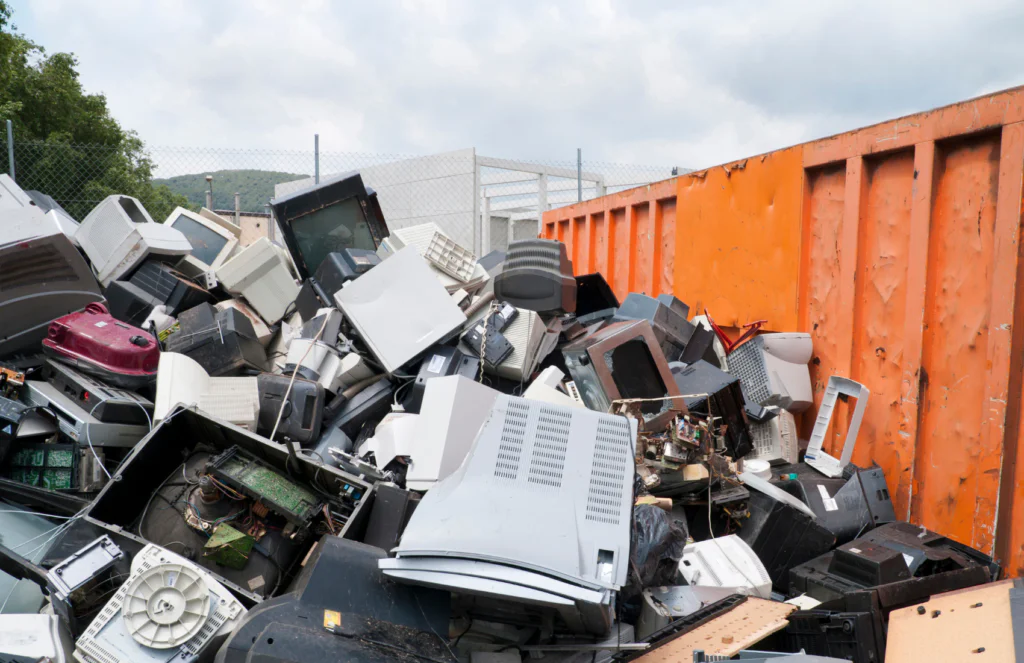
The Journey of a Discarded Appliance
What actually happens when you leave an appliance on the curb or drop it at a recycling center? The answer depends entirely on who picks it up and what they do with it.
The Wrong Path: Landfill Destination
When appliances are improperly disposed of, they typically end up in municipal landfills. There, they take up enormous amounts of space—a single refrigerator can occupy 50 cubic feet. The hazardous materials inside begin their slow breakdown process, potentially contaminating the surrounding environment for decades or even centuries.
Some appliances meet an even worse fate: illegal dumping in vacant lots, along roadsides, or in rural areas. We’ve responded to calls about appliances abandoned in these locations, and the environmental damage is often already underway by the time we arrive.
The Right Path: Professional Recycling
When appliances come to CJD E-Cycling, they enter a systematic process designed to maximize material recovery while ensuring environmental safety. Here’s what actually happens:
Step 1: Collection and Assessment
Appliances arrive at our facility through scheduled pickups, drop-offs, or bulk collection events. Our team immediately assesses each item to determine whether it has any potential for refurbishment or if it needs to go directly to recycling. Working appliances in good condition might be routed to charitable organizations, giving them a second life with families who need them.
Step 2: Safe Dismantling
This is where professional expertise makes all the difference. Refrigerators and freezers go to our certified technicians who are EPA-licensed to handle refrigerants. Using specialized recovery equipment, they carefully extract and contain these substances for proper disposal or reclamation. This isn’t something you can—or should—attempt yourself. Releasing refrigerants is not only environmentally harmful but also illegal under federal law.
For other appliances, our team systematically disconnects and removes hazardous components. Mercury switches from older appliances go into designated containers. Circuit boards containing small amounts of precious metals are set aside for specialized electronics recycling.
Step 3: Material Separation
Once hazardous materials are safely removed, the real dismantling begins. Using a combination of hand tools and machinery, we break down appliances into their constituent materials:
- Ferrous metals (steel and iron) are separated using magnets
- Non-ferrous metals (copper, aluminum, brass) are manually extracted
- Plastics are sorted by type when possible
- Glass from oven doors and other components is set aside
- Motors and compressors are processed separately
When we dismantle a typical washing machine, we recover the steel drum, copper motor windings, the stainless steel or plastic tub, wiring harnesses, and even the concrete counterweights (which can be crushed and reused). Nothing goes to waste if we can help it.
Step 4: Material Recovery and Resale
The separated materials are consolidated, baled, or prepared for transport to specialized recycling facilities. Steel goes to scrap metal processors who’ll melt it down for new products. Copper is particularly valuable—the copper from one washing machine can be used to create components for ten new appliances.
High-grade plastics might be processed into pellets for manufacturing new products. Even lower-grade plastics can be used in applications like plastic lumber or construction materials.
Step 5: Responsible Disposal of Non-Recyclables
Not everything can be recycled with current technology. Foam insulation from refrigerators, certain contaminated plastics, and some mixed materials must be disposed of. We work with certified facilities to ensure even these materials are handled according to environmental regulations.
Last month alone, we processed over 200 appliances. That translated to approximately 15 tons of steel, 3 tons of other metals, and 2 tons of plastics returned to the material stream. It’s tangible environmental impact you can measure.
Common Appliances and Their Unique Disposal Challenges
Not all appliances are created equal when it comes to recycling. Each type presents its own challenges and opportunities.
Refrigerators and Freezers: The Most Complicated
These are the appliances that keep us on our toes. Refrigerators and freezers are arguably the most problematic appliances to dispose of, which is exactly why they require the most care.
The refrigerant system is the obvious concern. Modern appliances use HFC refrigerants, while older models might contain CFCs or HCFCs. All of these must be professionally recovered—there’s no way around it. The EPA requires anyone handling these substances to be Section 608 certified, and violations carry serious penalties.
But the refrigerant is just the beginning. The foam insulation inside refrigerator walls often contains blowing agents that are also greenhouse gases. Proper recycling involves extracting these gases before the foam is processed. The compressor contains oil that must be drained and handled as hazardous waste. Mercury switches in older models control interior lights and need careful removal.
Here’s something most people don’t know: the energy efficiency improvements in modern refrigerators mean that replacing a refrigerator from the 1990s can save you $200 or more per year on electricity costs. But that old unit must be properly recycled—not relegated to the garage as a “beer fridge,” where it will consume energy inefficiently for years.
We’ve seen people try to DIY refrigerator disposal, and it’s always a mistake. Never attempt to remove refrigerants yourself. Never cut into the sealed system. Never throw a refrigerator in a dumpster. The environmental and legal consequences aren’t worth it.
Washing Machines and Dryers: Heavy Metal Recovery
Washing machines are our favorite appliances to process because they’re straightforward and highly recyclable. The steel drum, the outer cabinet, the motor—nearly everything has value.
Front-loading machines tend to have more complex bearing systems and rubber door seals that need to be removed, but they also often contain higher-quality stainless steel drums. Top-loaders are typically simpler to dismantle but may have more plastic components.
One challenge we regularly encounter: water damage and rust. Washing machines that leaked during their final days often have corroded steel that’s harder to recycle. If you’re storing a washing machine before disposal, try to keep it in a dry location.
Dryers are similar but with one key difference: the lint trap and ducting area. You’d be surprised how much lint accumulates inside a dryer over its lifetime. Before recycling, it’s helpful (though not required) to clean out as much lint as possible. It makes our job easier and reduces fire hazards during processing.
Dishwashers: Compact but Complex
Dishwashers pack a lot of recyclable material into a compact footprint. The stainless steel tub in modern dishwashers is valuable scrap. The pumps and motors contain copper windings. Even the plastic components can often be recycled.
The main challenge with dishwashers is the electronic control board, which has become increasingly sophisticated in modern appliances. These boards contain small amounts of precious metals but also potentially hazardous materials. They require specialized electronics recycling rather than just being tossed with general scrap.
Water supply lines and drain hoses should be disconnected before bringing a dishwasher for recycling, though we can handle that if needed. The mounting brackets and fasteners are typically steel and get recycled along with the main body.
Stoves and Ovens: Type Matters
The recycling approach for cooking appliances depends heavily on whether you have a gas or electric model.
Electric stoves and ovens are relatively straightforward. They’re primarily steel with some copper wiring and heating elements. Glass cooktops need to be carefully removed and processed separately. The insulation material is usually fiberglass, which we handle with appropriate safety precautions.
Gas stoves require an extra step: ensuring the gas line is properly capped. If you’re removing a gas stove yourself, please have a qualified professional handle the gas disconnection. We’ve responded to properties where homeowners attempted this themselves, and the results ranged from gas leaks to serious safety hazards.
The glass in oven doors can often be recycled, though it’s different from standard container glass. The tempered glass requires specialized processing.
Small Appliances: The Forgotten Category
People often overlook small appliances when thinking about appliance waste, but they add up quickly. Americans discard millions of microwaves, toasters, coffee makers, and blenders every year.
Microwaves present a unique challenge because of the magnetron—the component that generates microwaves for cooking. Magnetrons contain beryllium oxide ceramic and small amounts of thorium, requiring careful handling. Despite this, the steel cabinet, copper transformers, and other components make microwaves worthwhile to recycle.
Small kitchen appliances often end up in regular trash simply because people don’t realize they’re recyclable. That toaster contains steel and copper. That old coffee maker has a heating element worth recovering. Even blenders have motors with recyclable components.
Here’s a real example from last week: Someone brought us three boxes of small appliances they’d been storing in their attic for years. There were old hair dryers, a food processor, two blenders, a waffle iron, and various other items. From those boxes alone, we recovered about 40 pounds of mixed metals. Multiply that by thousands of households, and you see why small appliance recycling matters.
Your Options for Appliance Disposal
When it’s time to part with an appliance, you have several paths forward. Let’s look at each option honestly, including the pros and cons of each approach.
Professional Recycling Services
Companies like CJD E-Cycling specialize in appliance recycling. We handle everything from single-item residential pickups to full commercial building cleanouts.
Advantages: Professional recyclers have the equipment, certifications, and expertise to handle appliances safely. You get peace of mind knowing hazardous materials are properly managed. Most services offer convenient pickup, so you don’t need to transport heavy appliances yourself. You’ll often receive documentation certifying proper disposal, which can be important for rental properties or estate situations.
Considerations: There may be fees for certain appliances, particularly refrigerators and freezers due to the specialized handling required. Pricing varies by location and service provider, so it’s worth calling for a quote.
When to choose this option: If you have appliances containing refrigerants, if you can’t transport items yourself, if you want assurance of proper environmental handling, or if you need multiple appliances removed at once.
Retailer Take-Back Programs
Many appliance retailers offer removal of your old appliance when delivering a new one. Some charge a fee, others include it with purchase.
Advantages: Convenience—the delivery crew takes the old unit when they bring the new one. No separate scheduling required. Often cost-effective when already purchasing a new appliance.
What to know: Ask what actually happens to your old appliance. Some retailers work with certified recyclers (which is great), while others use waste haulers who may take items to landfills. The delivery crew may not be trained in proper refrigerant recovery or hazardous material handling.
When to choose this option: When buying a replacement appliance and the retailer partners with certified recyclers. Always ask about their downstream process.
Municipal Collection Events
Many cities and counties host periodic collection events for appliances and electronics, often called “e-waste events” or “bulky item collection days.”
Advantages: Usually free or low-cost for residents. Convenient community-based collection. Good for getting rid of multiple items at once.
Limitations: These events are typically infrequent (quarterly or semi-annually). They may have restrictions on what’s accepted or how many items per household. Weather-dependent and often involve waiting in line.
From our perspective, these events serve an important role in the community, and we support them. However, collection is only the first step—what matters is what happens afterward. Well-run events partner with certified recyclers to ensure proper processing.
When to choose this option: When you can wait until the next scheduled event, when you have multiple items to dispose of, and when the event is partnered with certified recyclers.
Donation and Resale
If your appliance still works reliably, donation might be the best option.
Good candidates for donation: Appliances less than 7-10 years old in working condition, clean appliances without significant cosmetic damage, energy-efficient models, and complete units with all necessary components.
Where to donate: Organizations like Habitat for Humanity ReStore, local charities, community groups, and even online marketplaces for local pickup.
Reality check: Be honest about condition. A barely-functioning appliance isn’t a gift—it’s passing a problem to someone else. If it wouldn’t be reliable for your own use, it shouldn’t be donated.
We regularly assess appliances that could be donated versus those needing recycling. About 10-15% of the appliances we receive are in good enough condition that we refer the owner to donation options. The rest need proper recycling.
When to choose this option: When the appliance works properly, is relatively energy-efficient, and would genuinely benefit someone else.
Manufacturer Take-Back Programs
Some appliance manufacturers offer take-back or trade-in programs, particularly for major brands.
How it works: Programs vary widely. Some offer credits toward new purchases. Others facilitate recycling of old models when you buy new. A few brands have ongoing collection programs.
The reality: These programs are less common than you might hope. They’re worth researching if you’re staying within the same brand, but availability varies significantly by manufacturer and location.
Preparing Your Appliance for Disposal: A Practical Checklist
Proper preparation makes the disposal process smoother and safer for everyone involved.
Before Pickup or Drop-Off
Clean it out thoroughly. This seems obvious, but you’d be surprised. Last month, someone brought in a freezer that still had food from 2019. Not only is this unsanitary, but it creates serious contamination issues in the recycling process. Spoiled food can ruin the value of recyclable materials and creates health hazards for workers.
For refrigerators and freezers: Remove all food, shelves, and drawers. Defrost completely and wipe down interior surfaces. For dishwashers: Run a final empty cycle if possible, or at least rinse it out. For washing machines: Run a rinse cycle or wipe down the drum interior. For ovens and stoves: Remove racks and clean off major grease and food residue.
Disconnect properly. For most appliances, simply unplugging them is sufficient. However, some situations require professional help:
- Gas stoves: Always have a licensed plumber or appliance technician disconnect gas lines. Never attempt this yourself unless you’re qualified. The risk of gas leaks is too serious.
- Built-in appliances: May require professional removal to avoid damage to cabinetry or countertops.
- Water lines: Shut off water supply valves and disconnect hoses from dishwashers and washing machines. Have a towel ready for residual water.
Remove personal items and valuables. We’ve found money, jewelry, important documents, and family photos inside appliances. Check all compartments, including small drawers and filters. Once an appliance enters the recycling process, retrieving items is difficult or impossible.
Measure doorways and pathways. If you’re having appliances picked up, ensure they can physically fit through doorways, around corners, and down staircases. Measure the appliance and the available clearance. This prevents delays and potential damage during removal.
Document the condition. If you’re donating an appliance for tax deduction purposes, photograph it and note the working condition. Keep receipts and documentation. While we’re not tax advisors, proper documentation supports deduction claims.
Check for recalls. Visit the Consumer Product Safety Commission website to verify there are no active recalls on your appliance. Some recalled appliances qualify for manufacturer buyback programs, which is better than paying for disposal.
Safety Considerations
Chemical cleanouts: If you used strong cleaning chemicals, allow proper ventilation time before the appliance is sealed for transport.
Sharp edges: Appliances being dismantled often have sharp edges, broken glass, or exposed metal. If you’re transporting items yourself, use work gloves and handle carefully.
Heavy lifting hazards: Refrigerators can weigh 200-300 pounds. Washing machines average 150-200 pounds. Never attempt to move these alone. Use proper lifting techniques or equipment like appliance dollies. It’s not worth a back injury.
The Hidden Value in Your Old Appliances
Let’s talk about what’s actually inside that old appliance sitting in your garage.
When we process a standard top-loading washing machine, we typically recover:
- 90-110 pounds of steel
- 3-5 pounds of copper from motor windings and wiring
- 1-2 pounds of aluminum
- 5-10 pounds of various plastics
- A motor that can be refurbished or recycled for parts
That copper alone has current scrap value of several dollars per pound. The steel, while less valuable per pound, adds up quickly across hundreds of appliances.
A typical refrigerator contains approximately:
- 150-170 pounds of steel
- 30-40 pounds of plastics
- 5-8 pounds of copper and aluminum
- 2-3 pounds of glass
The precious metals are particularly interesting. Circuit boards and electronic controls contain tiny amounts of gold, silver, and palladium. While individual appliances don’t yield much, the cumulative value across thousands of appliances is substantial.
The Environmental Math
Beyond monetary value, consider the environmental impact of material recovery:
Energy savings: Producing aluminum from recycled material uses 95% less energy than producing it from bauxite ore. Recycled steel production uses about 60% less energy than virgin steel production. Recycled copper requires 85% less energy than mining and refining new copper.
Carbon footprint reduction: Recycling one refrigerator prevents approximately 1,000 pounds of CO2 emissions compared to landfill disposal and virgin material production for replacement materials.
Resource conservation: Mining copper, aluminum, and iron ore causes significant environmental disruption. Every pound recovered through recycling is a pound that doesn’t need to be extracted from the earth.
Water conservation: Recycling metals uses dramatically less water than mining and refining virgin materials. This matters increasingly as freshwater becomes scarcer in many regions.
To make it tangible: the copper recovered from one washing machine can be used to create electrical components for ten new appliances. The steel from three refrigerators can be recycled into steel for one new car. Your disposal choice has real impact.
What to Look for in an Appliance Recycling Service
If you decide to use a professional recycling service, here’s how to evaluate your options.
Certifications That Matter
EPA Certification for Refrigerant Handling: This is non-negotiable for any service that handles refrigerators, freezers, air conditioners, or dehumidifiers. Ask to see Section 608 certification. If they can’t provide it, walk away.
R2 (Responsible Recycling) or e-Stewards Certification: These are gold-standard certifications for electronics and appliance recyclers. They ensure responsible downstream processing, proper worker safety protocols, and environmental management systems.
State and Local Licenses: Check that the company is properly licensed to operate in your area. Most states require specific licenses for waste handling and recycling operations.
Insurance and Bonding: Professional recyclers should carry liability insurance and be bonded. This protects you if something goes wrong during removal or transport.
Questions to Ask
Don’t be shy about asking detailed questions. Reputable recyclers welcome inquiries.
“What exactly happens to each component of my appliance?” Good recyclers can explain their process in detail. Vague answers like “we recycle everything” aren’t sufficient. Ask specifically about hazardous materials, metals, plastics, and non-recyclable components.
“Do you export materials internationally?” This matters more than you might think. Some recyclers ship materials overseas where environmental and labor standards may be weaker. While international trade in recyclables isn’t inherently wrong, transparency about downstream processing is important.
“Can I tour your facility?” Recyclers with nothing to hide should be open to facility tours (though they may have scheduled times due to safety protocols). If they refuse to let customers see operations, that’s a red flag.
“What documentation do you provide?” Professional services should offer certificates of recycling or disposal documentation, particularly for commercial clients or property managers who need records.
“What’s your downstream process?” Ask where materials go after leaving their facility. Do they process everything in-house, or do they work with downstream partners? Who are those partners?
Red Flags to Watch For
Suspiciously low prices or payment offers that seem too good to be true: Proper refrigerant recovery and hazardous material handling cost money. If someone offers to take refrigerators for free or even pay you for them without legitimate explanation of how they’re making money, they’re likely cutting corners on environmental compliance.
Vague or evasive answers: If your questions are met with dismissive responses or inability to explain processes, that’s concerning.
Cash-only operations with no documentation: Professional businesses provide receipts and documentation.
No visible certifications or credentials: Legitimate recyclers display their certifications prominently.
Pressure tactics: Reputable services don’t pressure you into immediate decisions or discourage you from getting quotes from competitors.
CJD E-Cycling’s Commitment
We believe you have a right to know where your appliance goes and how it’s processed. That’s why we maintain EPA certification for refrigerant handling, follow all state and federal regulations, provide detailed documentation when requested, and work exclusively with certified downstream processors.
We’re not perfect—no recycling operation is—but we’re committed to continuous improvement in our environmental practices and transparency with our customers. When you call us about appliance disposal, we’ll give you straight answers about our process, pricing, and what happens to your items.
Future-Proofing: Making Better Appliance Choices
While this guide focuses on disposal, we’d be remiss not to mention how purchasing decisions affect future appliance waste.
When Buying New Appliances
Consider longevity and repairability: Some manufacturers design appliances for longer lifespans and make replacement parts readily available. Others use proprietary components that make repairs expensive or impossible. Research reliability ratings and parts availability before purchasing.
Energy efficiency matters: Beyond the obvious utility savings, energy-efficient appliances often have longer lifespans. They also reduce operational environmental impact throughout their life. Look for ENERGY STAR certification.
Check manufacturer take-back programs: Some brands have established recycling programs for their products. If other factors are equal, this could be a deciding factor.
Modular and repairable designs: Appliances designed with repair in mind have removable, replaceable components rather than integrated systems that fail as a unit. This extends useful life and delays disposal.
The Right-to-Repair Movement
There’s growing momentum for legislation requiring manufacturers to make repair information, tools, and parts available to consumers and independent repair shops. This matters for appliance waste because:
- Repairable appliances stay in service longer
- More independent repair options keep costs down
- Reduced barriers to repair mean fewer premature disposals
We see the consequences of anti-repair design daily. Appliances that could be fixed with a $20 part and an hour of work instead get discarded because replacement parts are unavailable or repairs are prohibitively expensive.
Emerging Technologies
The appliance industry is slowly moving toward more sustainable designs. New refrigerants with lower global warming potential are being adopted. Some manufacturers are experimenting with leasing models where they retain ownership and responsibility for end-of-life processing. Modular designs that facilitate component replacement and recycling are appearing in premium product lines.
These innovations deserve support from consumers. Your purchasing decisions influence what manufacturers prioritize.
Taking the Next Step
Appliance waste is a significant environmental challenge, but it’s one where individual actions genuinely matter. Every appliance properly recycled recovers valuable materials, prevents hazardous substances from contaminating the environment, and reduces the demand for virgin material extraction.
You now know more about appliance disposal than 95% of people. You understand why proper recycling matters, what happens during the process, how to evaluate your options, and how to prepare appliances for disposal.
The next time you’re staring at an old refrigerator in your garage or a dead washing machine in your basement, you don’t have to wonder what to do. You have options, and you can make an informed choice.
Ready to Dispose of Your Appliances Responsibly?
If you’re in the Missouri region and have appliances that need proper disposal, CJD E-Cycling is here to help. We handle everything from single-item residential pickups to complete estate and commercial cleanouts. Our EPA-certified technicians ensure safe handling of refrigerants and hazardous materials, and we maximize material recovery for every appliance we process.
Contact us for a quote or to schedule pickup. We’ll answer your questions honestly and handle your appliances with the environmental care they require.
Not in our service area? Use the information in this guide to find a certified recycler near you. Look for EPA certification, ask the right questions, and choose a service that prioritizes environmental responsibility over convenience alone.
Every appliance properly recycled is a step toward a more sustainable future. Your choice matters, and we’re grateful you took the time to learn how to make the right one.
Have questions about specific appliances or disposal scenarios? Leave a comment below or reach out directly. We’re always happy to provide guidance.